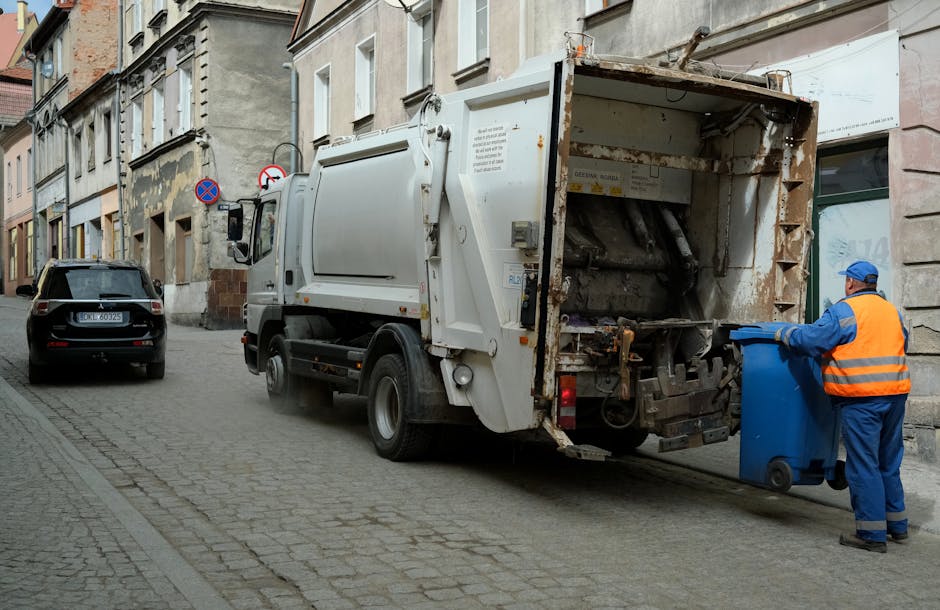
Common access problems for West London rubbish collection jobs
If you arrange or manage rubbish collection in West London, access is often the bit that decides whether the job feels smooth or mildly chaotic. Narrow streets, tight turning circles, permit bays, basement flats, shared driveways, low bridges, and the classic London surprise of a van blocking exactly where you needed to park can all slow things down. Common access problems for West London rubbish collection jobs are not just an inconvenience; they affect timing, labour, safety, pricing, and whether the waste can be removed on the day without a second visit.
In this guide, we break down the real access issues that crop up most often, why they matter, and what you can do about them before the team arrives. We will also look at practical planning steps, common mistakes, compliance considerations, and the kind of site details that save everyone a lot of hassle. Truth be told, a little preparation goes a long way.
Table of Contents
- Why Common access problems for West London rubbish collection jobs Matters
- How Common access problems for West London rubbish collection jobs Works
- Key Benefits and Practical Advantages
- Who This Is For and When It Makes Sense
- Step-by-Step Guidance
- Expert Tips for Better Results
- Common Mistakes to Avoid
- Tools, Resources and Recommendations
- Law, Compliance, Standards, or Best Practice
- Options, Methods, or Comparison Table
- Case Study or Real-World Example
- Practical Checklist
- Conclusion
- Frequently Asked Questions
Why Common access problems for West London rubbish collection jobs Matters
Access is not a side issue. It is usually the first practical test of whether a rubbish collection job can be completed safely and efficiently. In West London, that matters even more because many properties sit on busy roads, older terraces, converted homes, estates with controlled entry, or streets where parking is limited and loading space disappears fast.
When access is poor, the knock-on effects are immediate. Crews may need to park further away, carry waste by hand for longer distances, reverse carefully into awkward spaces, or wait for a gate code, a concierge, or a neighbour to move a car. That sounds small on paper. In real life, it can stretch a straightforward clearance into a job with extra labour, extra time, and extra risk.
There is also a customer side to this. If access has not been checked properly, the person booking the job may expect a one-visit collection when the site really needs more planning. Nobody enjoys that awkward conversation at the kerbside, especially when the van is already idling and the dustbins are somewhere behind a locked courtyard. A bit of clarity upfront keeps everyone on the same page.
Expert summary: In rubbish collection, access is not just about parking. It affects safety, lifting distance, site time, communication, and whether the waste can be removed without avoidable delays. Good access planning is one of the easiest ways to reduce friction.
How Common access problems for West London rubbish collection jobs Works
Most access problems fall into a few clear categories. Once you know them, it becomes much easier to spot trouble before it turns into a delay.
1. Vehicle access problems
This is the big one. The collection vehicle may be too large for the street, unable to turn safely, blocked by parked cars, or restricted by low trees, speed bumps, bollards, or height barriers. In some parts of West London, the road layout is simply awkward for larger vans or lorries. A driver may be able to enter but not exit cleanly, which is not ideal, to put it mildly.
2. Carry distance and loading route issues
Even if the vehicle can park nearby, the route between the waste and the van can be the real problem. Long carry distances, stairs, gravel paths, split levels, and narrow hallways all add effort. A basement flat with two flights of steps and no direct rear access is a very different job from a ground-floor property with a clear front drive.
3. Entry control and permissions
Gated properties, blocks of flats, managed estates, and commercial yards often require access codes, fobs, or prior notice. If those details are missing, a crew can arrive on time and still be unable to start. That is frustrating for everyone, and it is one of the most common avoidable problems.
4. Obstructions on the day
Sometimes the access was fine at booking but not on collection day. A neighbour parks across the drive, a delivery vehicle blocks the loading point, or a bin store is suddenly locked. West London is busy, and the environment changes quickly. One missed gate code or one van in the wrong place can be enough to throw the schedule.
5. Unsafe or unsuitable access routes
Some routes are technically accessible but not suitable for routine waste removal. Examples include slippery paths, loose steps, poor lighting, unstable surfaces, or routes that force staff to carry heavy items through tight shared spaces. If a route looks like a trip hazard waiting to happen, it probably is.
In practice, good access planning means checking not only whether a vehicle can reach the address, but whether people can move waste safely from source to collection point. That distinction matters more than most people realise.
Key Benefits and Practical Advantages
Sorting access issues properly gives you more than a smoother collection. It improves the whole job.
- Less delay on site: Crews spend less time waiting, searching for entry, or repositioning the vehicle.
- Safer handling: Clear routes reduce awkward lifts, slips, and unnecessary carrying distance.
- Better job accuracy: When the site is assessed properly, estimates and expectations are usually more realistic.
- Lower chance of failed collection: Fewer access surprises mean fewer situations where waste has to be left behind.
- Cleaner communication: Everyone knows what to expect, which makes the day feel calmer. Not exciting, maybe, but very useful.
- More efficient pricing discussions: Access conditions often influence labour and time, so accurate information helps avoid misunderstandings.
There is also a quieter benefit: a professional impression. If a team can arrive, assess the access, and get on with the work without drama, it gives the whole job a sense of order. For landlords, property managers, builders, and homeowners alike, that matters.
Who This Is For and When It Makes Sense
This topic matters to more people than you might think. If you are arranging a one-off clearance, moving out of a flat, managing a shop refit, or booking repeat collection for a property portfolio, access affects your result.
It is especially relevant for:
- Homeowners and renters with basements, rear access only, tight side passages, or no parking outside.
- Landlords and letting agents handling end-of-tenancy clearances where speed and reliability matter.
- Builders and trades who need rubble or mixed waste removed from a site with limited space.
- Facilities managers dealing with bin stores, loading bays, and estate access rules.
- Shops, cafes, and offices on busy West London roads where stopping space is limited.
It makes sense to focus on access before the job if any of these sound familiar: narrow road, controlled entrance, permit parking, basement storage, rear garden waste, or shared access through a building. If you have ever thought, "It should be fine," that is usually the moment to check properly.
Step-by-Step Guidance
Here is a simple way to reduce access problems before collection day.
- Walk the route from waste to vehicle. Start at the waste itself and trace the actual path. Do not assume the front door is the route if the waste sits in the back garden or basement.
- Measure tight points. Gates, alleyways, side passages, stair widths, and turning corners can all make a job harder than expected. Even a quick visual check helps.
- Check parking and stopping options. Can a van stop legally and safely near the property? Is there permit parking, a loading bay, or a yellow line restriction to think about?
- Confirm entry details. Gate codes, intercom instructions, concierge names, working hours, fob access, and site rules should be confirmed in advance.
- Look for shared-space obstacles. Bikes, bins, planters, scaffold, prams, and parked cars all matter. The little things are often the annoying things.
- Flag hazards early. Uneven ground, poor lighting, slippery steps, or broken paving should be mentioned before the crew arrives.
- Share photos if possible. A few clear images of the route, entry point, and waste location can prevent a lot of guesswork.
- Build in buffer time. West London traffic, loading restrictions, and estate access delays can all affect arrival windows. Being a bit flexible is rarely wasted.
If you are booking a larger or more involved collection, this sort of pre-check is even more valuable. It helps the provider choose the right vehicle, crew size, and approach. That is exactly the kind of planning that makes a job feel easy rather than improvised.
Expert Tips for Better Results
After enough collections, a few patterns become obvious. The jobs that run smoothly usually have the same ingredients: clear information, realistic expectations, and a sensible route.
Send photos from the actual access point
Not the front door in perfect daylight if the real issue is the back alley. Photograph the part that matters. A picture of a narrow gate, a low arch, or a shared driveway tells far more than a general description ever will.
Describe the waste location, not just the postcode
A postcode is only half the story. Waste on the ground floor near the front drive is easier to remove than the same pile at the end of a basement corridor. Say where the items are now and how they can be reached.
Think in terms of lifting, carrying, and turning
Access problems are often hidden in the turns. A straight path may look fine until you realise there is a tight L-shaped bend halfway along. That is where wardrobes, broken furniture, and rubble bags start becoming awkward.
Be honest about parking
It is tempting to say "parking should be fine" and hope for the best. Better to say, "There is no guaranteed parking outside, but there is a side street two minutes away." That gives the team something real to work with.
Check for timing clashes
School run, refuse day, market hours, deliveries, neighbours' routines, estate rules - all of it can affect access. In a dense part of West London, even 20 minutes can make a difference.
Small tip, but a good one: if the access is awkward, mention it twice, once in writing and once when confirming the booking. It sounds overly cautious. It is not. It just saves the classic "Oh, I thought you knew" moment.
Common Mistakes to Avoid
Access problems are often caused by avoidable assumptions. The most common mistakes are simple, but they add up quickly.
- Assuming a van can park right outside. In West London, that is often optimistic.
- Ignoring basement or rear access. The main entrance may look easy while the actual route is not.
- Forgetting to mention shared controls. Locked gates, concierge desks, and estate rules need advance notice.
- Underestimating carry distance. Ten metres feels short. Fifty metres with awkward bags does not.
- Not clearing the route. A corridor full of boxes or a driveway scattered with loose items slows everything down.
- Leaving access details until the morning of the job. By then, it may be too late to adjust crew or vehicle plans.
- Failing to consider neighbours or other users. Shared access can create bottlenecks if everyone is trying to move at once.
One more thing: people sometimes assume access issues are only a concern for big commercial jobs. Not really. A small domestic collection can be just as awkward if it involves a top-floor flat, a narrow staircase, and no easy loading point.
Tools, Resources and Recommendations
You do not need specialist equipment to improve access planning, but a few basic tools help a lot.
| Tool or resource | Why it helps | Best use |
|---|---|---|
| Phone camera | Shows the real route, gate, loading point, and obstacles | Before booking and again on the day if something changes |
| Simple measurement tape | Checks gate widths, corridor gaps, and stair clearances | Properties with tight access or bulky items |
| Site notes or access instructions | Keeps codes, parking details, and contact names in one place | Managed buildings and repeat collections |
| Basic site sketch | Helps explain where the waste is and how it can be reached | Rear gardens, yards, estates, and construction sites |
| Photo set shared in advance | Reduces surprises and improves planning accuracy | Any job with uncertain vehicle or pedestrian access |
If you are comparing collection providers, ask how they handle access checks. A good team will usually want to know about parking, lifting distance, stairs, and entry controls before they quote. That is not fussiness. It is competence.
For anyone managing recurring collections, it also helps to keep a short access record for each site. Nothing fancy. Just a note of the usual entry point, loading bay rules, gate codes, and any recurring blockages. Future you will be grateful. Probably with coffee in hand, checking the phone at 7:30 in the morning.
Law, Compliance, Standards, or Best Practice
Access issues are not only a convenience matter. They can touch on safety and operational responsibility. In UK waste work, providers and site users should take a sensible approach to risk, vehicle movement, lifting, and safe handling. The exact obligations can vary depending on the site type, the waste involved, and who controls the premises, so it is always wise to treat access as part of the wider safety plan rather than an afterthought.
Best practice usually includes:
- making sure the route is reasonably safe for staff and others using the site
- avoiding unnecessary carrying distances where practical
- keeping shared access points clear during the collection window
- providing accurate information about known hazards
- ensuring entry instructions are clear and current
For commercial premises or managed buildings, access arrangements may also need to fit site-specific rules, fire safety expectations, or loading restrictions. None of that needs to be overcomplicated, but it does need to be thought through. A slick-looking collection plan is no use if a fire exit gets blocked or a stairwell becomes crowded with bags and boxes.
Where waste is handled on busy sites, it is sensible to coordinate collection times to avoid conflict with deliveries, residents, or customers. That bit sounds obvious, but obvious things are the easiest to miss when everyone is in a rush.
Options, Methods, or Comparison Table
There is no single right way to deal with access problems. The best method depends on the property, the amount of waste, and how tight the site really is. Here is a useful comparison.
| Method | Best for | Pros | Limits |
|---|---|---|---|
| Kerbside collection | Roads with nearby legal stopping space | Fast, efficient, minimal carrying | Not possible where parking is tight or restricted |
| Carry-from-property collection | Homes, flats, and small commercial spaces with short access routes | Flexible and common for domestic jobs | Long carry distances take more time and effort |
| Pre-arranged loading bay access | Blocks, offices, and estates with managed entry points | Controlled, organised, and easier to schedule | Depends on accurate permissions and timing |
| Smaller vehicle approach | Narrow streets or tighter roads in West London | More manoeuvrable | May require more trips or careful load planning |
| Staged removal | Large clearances with limited access or volume | Reduces congestion on site | Takes more coordination and may not suit urgent jobs |
To be fair, the best option is often the least dramatic one: the approach that fits the site rather than forcing the site to fit the approach.
Case Study or Real-World Example
Here is a realistic West London scenario. A house clearance is booked for a Victorian conversion with a basement flat and a rear alley. The front road has resident permit parking and a narrow loading window in the morning. On paper, it looks manageable. On arrival, the team finds a car partly blocking the alley entrance, two bins left in the passage, and a gate code that only works for the daytime concierge.
What changed the outcome was not magic, just better preparation on the second visit. The access route was photographed in daylight, the gate code was confirmed, the bins were moved, and the neighbours were given a rough collection window. The next collection was slower than a perfect kerbside job, sure, but it was completed cleanly and without the awkward back-and-forth of the first attempt.
The lesson is simple: access problems are often manageable, but only if they are named early. Once the site detail is clear, the rest becomes much easier to plan. A lot of "difficult jobs" are actually just "unprepared jobs" in disguise.
Practical Checklist
Use this before any rubbish collection job where access might be tight.
- Address confirmed and access route described clearly
- Parking or stopping point identified
- Gate codes, fobs, or concierge details checked
- Waste location confirmed with photos if possible
- Carry distance estimated
- Stairs, narrow hallways, or turning points noted
- Shared access users informed if relevant
- Known hazards flagged such as poor lighting, wet surfaces, or uneven paving
- Collection time reviewed against traffic, deliveries, or estate rules
- Back-up contact available in case access changes on the day
Quick reminder: if anything feels uncertain, ask about it before the crew arrives. That one message can save a great deal of stress later.
If you are planning a collection and want it handled with less hassle, better clarity, and fewer surprises on the day, take a few minutes to gather the access details now. West London waste removal services are usually smoother when the route, parking, and entry point are all understood in advance.
Get a free quote today and see how much you can save.
Conclusion
Common access problems for West London rubbish collection jobs are rarely dramatic on their own, but together they can turn a simple clearance into a slow, awkward, and expensive one. The good news is that most of the headaches are preventable. Clear communication, a realistic look at the route, and early mention of parking or entry restrictions can make all the difference.
If you remember just one thing, make it this: access is part of the job, not a separate issue. Check it early, describe it honestly, and give the crew enough information to plan properly. That is usually enough to turn a tricky collection into an ordinary one, and ordinary is lovely, really.
And if the site is still awkward? Fair enough. West London has a way of keeping life interesting.
Frequently Asked Questions
What are the most common access problems for rubbish collection in West London?
The most common issues are limited parking, narrow roads, restricted entry, long carry distances, basement access, shared driveways, and blocked loading points. Managed buildings and older properties often add another layer of complexity.
Why does access affect the price of a rubbish collection job?
Access can affect the time, labour, and vehicle planning needed for the job. If waste must be carried a long distance, handled through stairs, or moved from a difficult entry point, the work usually takes more effort.
How can I tell if my property has access problems before booking?
Walk the route from the waste to the road and look for tight gates, steps, limited parking, and entry controls. If you would struggle carrying a heavy item through the route yourself, there is probably an access consideration to flag.
Should I send photos of the site before collection?
Yes, if possible. Photos of the gate, driveway, corridor, parking area, or waste location can prevent misunderstandings and help the crew plan the right approach.
What if a neighbour blocks the driveway or street access on the day?
That can happen in busy parts of West London. It is usually best to report it quickly so the collection can be rescheduled or adjusted if there is a safe alternative route.
Do basement flats create special access issues?
They often do. Basement jobs may involve stairs, narrow corridors, poor lighting, or awkward turns, which can slow removal and increase handling effort.
Is loading bay access better than roadside collection?
Usually yes, if it is available and properly arranged. A loading bay can make vehicle positioning easier, but it still depends on permissions, timing, and whether the route to the waste is clear.
What details should I give when arranging a rubbish collection?
Give the exact location of the waste, parking options, gate codes, access restrictions, stair or lift details, and any known hazards. The more practical detail you share, the easier the job is to plan.
Can access problems delay the job even if the crew arrives on time?
Absolutely. A team can arrive punctually and still be delayed by blocked entry, missing codes, parking restrictions, or a difficult route from the property to the vehicle.
Are access checks important for small domestic clearances too?
Yes. Even a small job can become awkward if the waste is in a rear garden, top-floor flat, or basement with no direct vehicle access. Size does not always equal simplicity.
What is the best way to prepare for a collection in a busy West London street?
Confirm parking options, choose a sensible time window, keep the access route clear, and let all relevant people know when the crew is expected. On busy roads, small timing gaps can make a big difference.
What should I do if I am not sure whether access is suitable?
Be honest about the uncertainty and ask for guidance before the booking is confirmed. A quick discussion early on is much easier than discovering the problem when the van is already outside.